

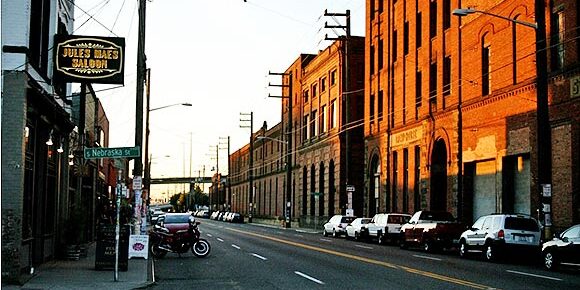
If Seattle neighborhoods had personalities, Georgetown would be the one wearing steel-toe boots, paint-splattered jeans, and a sly grin. It’s gritty, creative, unapologetically industrial—and it sits on top of one of the most fascinating and forgotten chapters in Seattle history: Hooverville.
Long before Georgetown became known for its breweries, artist studios, and massive industrial buildings, this low-lying stretch south of downtown was quite literally built on mud, rail lines, and resilience.
Georgetown’s Industrial Roots
Georgetown is one of Seattle’s oldest neighborhoods, officially founded in 1904, before it was annexed by the city. Its location near the Duwamish River made it ideal for manufacturing, shipping, and rail access—three things that still define the area today.
Early on, Georgetown attracted brickmakers, foundries, mills, and factories. Railroads crisscrossed the district, connecting Seattle to the rest of the Pacific Northwest. When Boeing arrived in nearby Tukwila in the early 20th century, Georgetown became an essential support zone—housing suppliers, workers, warehouses, and logistics operations.
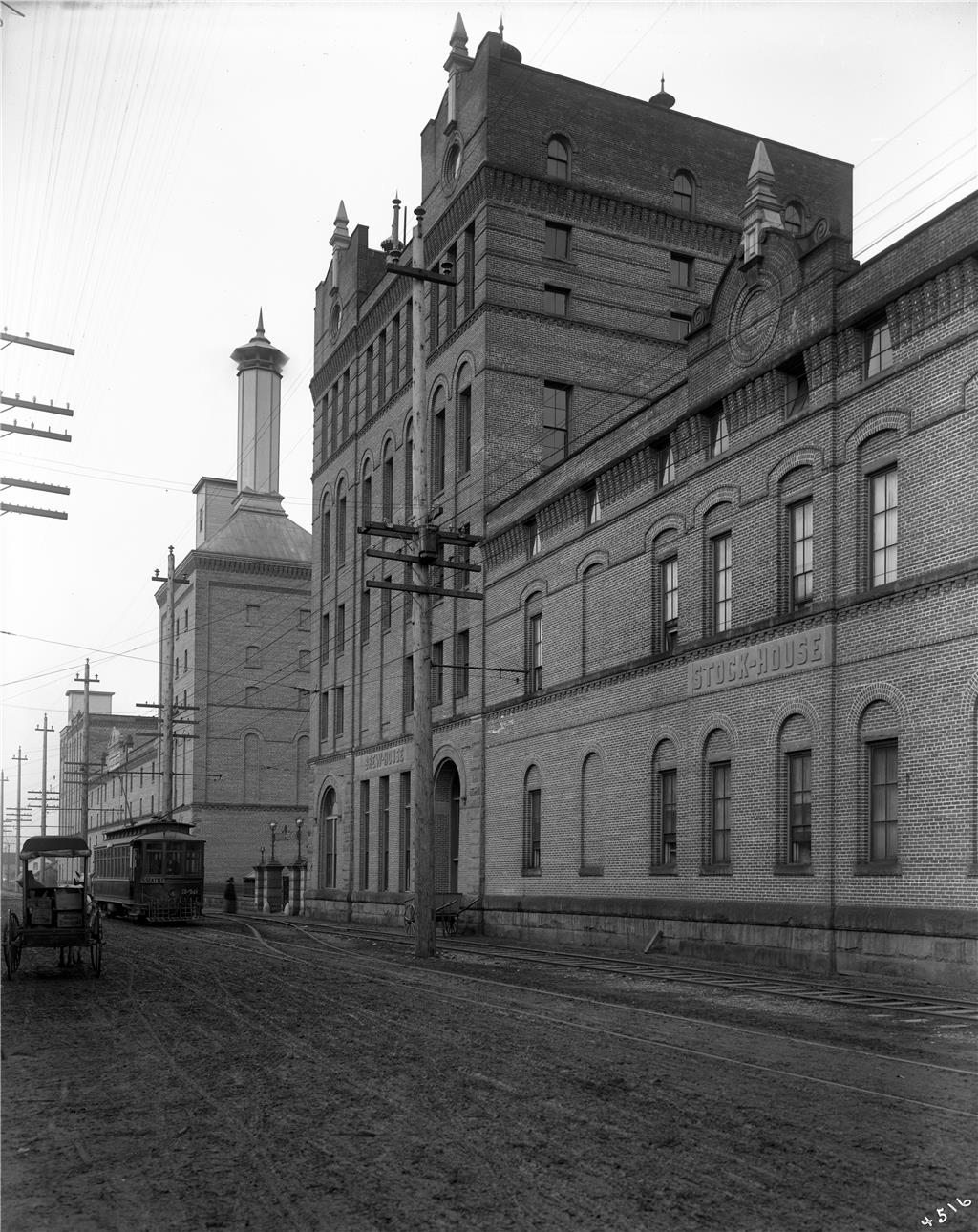
Unlike many Seattle neighborhoods that evolved away from their industrial past, Georgetown leaned into it. Heavy concrete buildings, wide streets, and utilitarian design weren’t replaced—they were repurposed.
And that rugged backbone would become crucial during the darkest economic moment in American history.
Hooverville: A City Born of Desperation
During the Great Depression, unemployment in Seattle skyrocketed. Thousands of people—dockworkers, mill workers, veterans, families—lost their homes almost overnight. With nowhere else to go, they began building makeshift shelters along the tide flats south of downtown, near what is now Georgetown and SoDo.

Image Source: Pubs, Bars, Dives, Online
This settlement became known as Hooverville, named bitterly after President Herbert Hoover, whom many blamed for the economic collapse.
At its peak in the early 1930s, Hooverville was home to more than 1,000 people, making it one of the largest shantytowns in the United States.
But Hooverville wasn’t chaos.
It had:
-
Organized streets and neighborhoods
-
Community rules and leadership
-
A mayor elected by residents
-
Shared kitchens, gardens, and informal businesses
People built homes from driftwood, scrap lumber, tar paper, and anything salvaged from the industrial yards nearby. Some structures were surprisingly sturdy, complete with windows, porches, and stoves.
In many ways, Hooverville functioned as a self-governing city—one born out of necessity, dignity, and survival.

Image Source: Reddit
Why Georgetown Was the Perfect (and Tragic) Location
The same qualities that made Georgetown ideal for industry made it a refuge during the Depression. The area was close to jobs (when they existed), rail lines, food sources, and shipping docks. The land was marginal, flood-prone, and undesirable for traditional housing—so authorities initially tolerated the settlement.
But as the economy recovered and World War II ramped up, tolerance faded.
In 1941, the City of Seattle ordered Hooverville demolished to make way for wartime industrial expansion. Entire neighborhoods were cleared. Residents were displaced again—many with nowhere to go.
Today, almost nothing remains physically. No signs. No plaques. Just warehouses, rail yards, and pavement.

Image Source: Historylink, Online
Georgetown Today: Still Built for Makers
Fast forward to today, and Georgetown feels like a spiritual descendant of its past.
The district is still a hub for:
-
Manufacturing and industrial users
-
Creative studios and artists
-
Breweries, distilleries, and music venues
-
Small businesses that value space, grit, and authenticity
It’s one of the few places in Seattle where industrial work and creative culture coexist without apology. The buildings are big. The zoning is flexible. The history is heavy—and visible.
Even the neighborhood’s art reflects this past. Murals, found objects, reclaimed materials, and experimental spaces echo the resourcefulness of Hooverville’s builders decades ago.
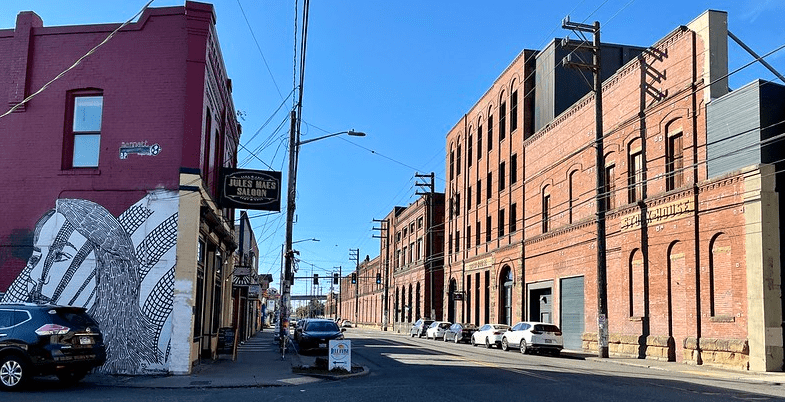
Image Source: SDOT Blog, Online
Why This History Still Matters
Georgetown isn’t trendy by accident. It’s resilient by design.
Understanding Hooverville adds depth to the neighborhood’s identity. This land has always been a place where people adapt, build, and survive—whether that meant crafting homes from scrap wood or reinventing warehouses for modern industry.
Next time you’re driving through Georgetown, grabbing a beer, touring a warehouse, or marketing an industrial property, remember this: beneath the concrete and rail lines once stood an entire city that refused to disappear quietly.
Georgetown didn’t forget its past—it built on it.

Image Source: Homes.com